
Fuel injectors play a major role in how your engine runs. They deliver a fine spray of fuel into the engine at the right time and in the right amount. When that spray is even and controlled, the fuel mixes properly with air and burns more completely.
Over time, deposits can begin to form in and around the fuel system. These deposits may affect the injector’s spray pattern or limit the amount of fuel it delivers. When that happens, an engine may not run as smoothly or respond as quickly as it once did.
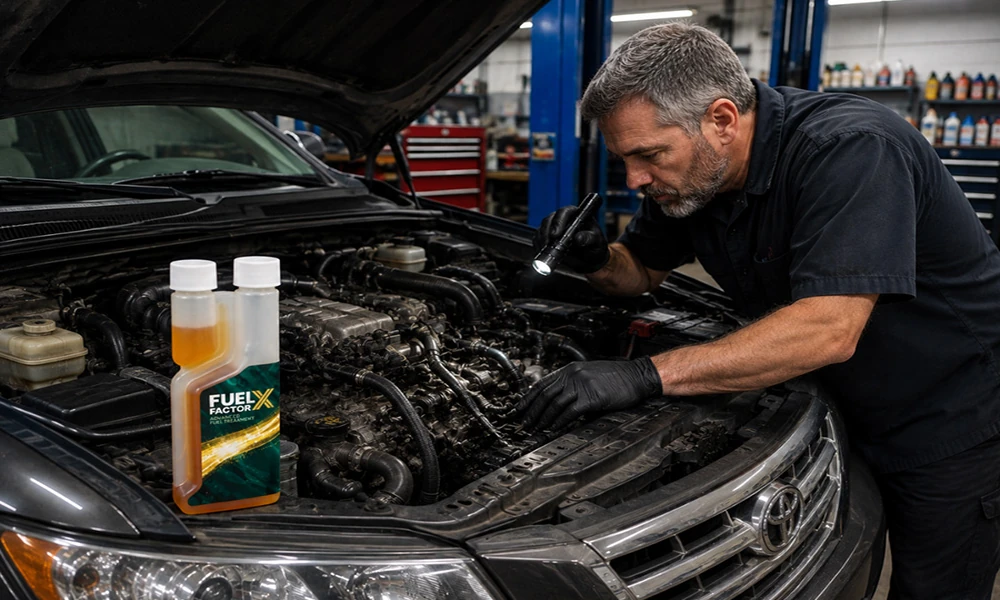
Using a quality fuel treatment may help control these deposits and support a cleaner fuel system. Fuel Factor X is a concentrated fuel treatment designed for both gas and diesel engines. It can be added during a fill-up as part of a regular fuel-system care routine.
What Do Fuel Injectors Do?
The engine in your car or truck needs fuel, air, and a spark or source of ignition to produce power. Fuel injectors are responsible for delivering the fuel.
Modern injectors must work with great accuracy. They open and close many times each minute. Each injector has very small openings that turn liquid fuel into a fine spray. This allows the fuel to mix with air before or during combustion.
A good spray pattern helps the engine use fuel properly. A poor spray pattern can cause the fuel to burn less evenly. It is similar to the difference between a garden hose spraying a fine mist and one releasing an uneven stream.
The U.S. Department of Energy has studied how injector design and fuel spray affect combustion. Its research shows that better fuel atomization can support more efficient combustion and help reduce the formation of particles in diesel engines.
How Injector Deposits Affect Performance
Fuel injectors work in a hot and demanding environment. Fuel quality, engine design, driving habits, and maintenance can all affect the buildup of deposits.
A small amount of buildup may not cause an obvious problem. As deposits increase, however, they can begin to affect how fuel moves through the injector. The engine may receive an uneven spray or less fuel than expected.
Possible signs of a dirty fuel system can include:
- Rough or uneven idling
- Slower throttle response
- Hard starts
- Hesitation during acceleration
- Reduced fuel economy
- An engine that does not feel as smooth as usual
These symptoms do not always mean the injectors are dirty. Spark plugs, filters, sensors, ignition parts, or mechanical problems can cause similar issues. If a vehicle continues to run poorly, it should be inspected by a trained technician.
Can Cleaner Injectors Improve Throttle Response?
Throttle response is how quickly the engine reacts when you press the gas pedal. The engine needs the correct amount of fuel and air to respond smoothly.
When injectors have a clean and even spray pattern, fuel can mix more effectively with air. This may help the engine respond more smoothly during acceleration. If deposits are affecting fuel delivery, removing or controlling them may help restore some of the performance that was lost.
A fuel treatment will not turn a normal engine into a high-performance engine. It may, however, help a properly maintained engine operate closer to the way it was designed to run.
Results will depend on the vehicle, its condition, the fuel being used, and the amount of buildup already present.
Does Cleaning Fuel Injectors Improve Performance?
Cleaning fuel injectors can improve performance when injector deposits are causing the problem. A cleaner injector may provide a more even spray, which can support smoother combustion, better throttle response, and steadier engine operation.
The biggest change is often noticed in an engine that has developed deposits over time. A newer engine or an engine that is already clean may not show a noticeable difference.
Fuel injector cleaning is also not a repair for damaged parts. A fuel additive cannot fix a broken injector, failed fuel pump, bad sensor, worn spark plug, or other mechanical problem.
Think of fuel treatment as preventive care or basic system support. It is not a replacement for repairs or regular maintenance.
Does Fuel Injector Cleaner Actually Work?
Fuel injector cleaners can work when they contain effective cleaning agents and are used as directed. The goal is to help loosen or control deposits as treated fuel moves through the fuel system.
There is good evidence that detergent levels in fuel make a difference. AnAAA fuel-quality study found that the non-top tier gasoline brands it tested produced 19 times more engine deposits than the top tier brands after 4,000 miles of simulated driving. AAA also noted that engine deposits can hurt fuel economy, emissions, and vehicle performance.
Gasoline sold in the United States already contains a minimum amount of detergent. TheEnvironmental Protection Agency requires gasoline to contain certified detergent additives. However, detergent levels and additive packages can vary among fuel brands.
A separate fuel treatment can provide added fuel-system support. Whether a driver notices a difference will depend on the product, the engine, the fuel, and the condition of the fuel system.
Always follow the directions on the product label. Adding more than the recommended amount does not guarantee better results.
Do Mechanics Recommend Fuel Additives?
There is no single answer because vehicles and fuel additives are not all the same.
Some mechanics recommend a quality fuel-system cleaner as part of preventive care, especially when a vehicle has symptoms that may be related to deposits. Others may suggest using high-detergent fuel or performing a professional fuel-system service when needed.
A careful mechanic will not claim that one bottle can solve every engine problem. The best advice depends on the vehicle’s age, condition, mileage, and maintenance history.
It is also wise to check the vehicle owner’s manual. Some manufacturers provide specific guidance about fuel additives. Avoid unknown products that make extreme promises, and never use an additive that is not made for your type of engine or fuel.
Where Fuel Factor X Fits In
Fuel Factor X is a concentrated fuel treatment made for gas and diesel engines. It is designed to support a cleaner fuel system, smoother engine operation, and more complete use of the fuel already in the tank.
Because it is concentrated, only the amount listed in the product directions should be used. It can be added during a regular fill-up without creating a complicated maintenance routine.
Fuel Factor X should be viewed as a fuel-system supplement. It does not replace oil changes, air-filter replacement, spark-plug service, professional injector cleaning, or other maintenance recommended by the vehicle manufacturer.
A Cleaner Fuel System Starts With Consistent Care
Clean injectors help deliver fuel in the fine, controlled spray an engine needs. When deposits interfere with that spray, combustion, throttle response, fuel economy, and everyday performance may be affected.
A quality fuel treatment may help control deposits and support cleaner fuel delivery. Fuel Factor X provides a simple option for drivers looking to add fuel-system care to their normal routine.
Results can vary based on engine condition, maintenance history, driving habits, fuel quality, vehicle type, and product use. If an engine has ongoing performance problems, have it checked by a qualified mechanic.